
New York City has about one million rent-stabilized apartments, representing roughly 41% of the city's rental apartments. To find one, search across fragmented listing channels, then verify the specific apartment's status through the lease and its official rent history before you sign.
Most renters approach this search as if stabilized apartments were hidden behind a government waiting list. They aren't. The problem is distribution: listings appear through brokers, personal referrals, building contacts, and online platforms, with no single official marketplace for available units. Your advantage comes from building a disciplined search system and treating verification as part of the application, not an afterthought.
Table of Contents
- The Scale of Rent Stabilization in New York City
- Where to Find Rent-Stabilized Listings
- How to Verify Rent Stabilization Status
- Understanding Building Eligibility and Exceptions
- Timing Your Application and Deal Strategy
- Putting It All Together - Your Search Action Plan
The Scale of Rent Stabilization in New York City
The search becomes more rational when you understand the size of the market. New York City has approximately one million rent-stabilized apartments, about 41% of its rental apartments and roughly 27% of all housing stock citywide, according to the New York City Independent Budget Office's analysis of the rent-stabilized housing stock. That's a major segment of the rental market, not a rare exception reserved for a lucky few.
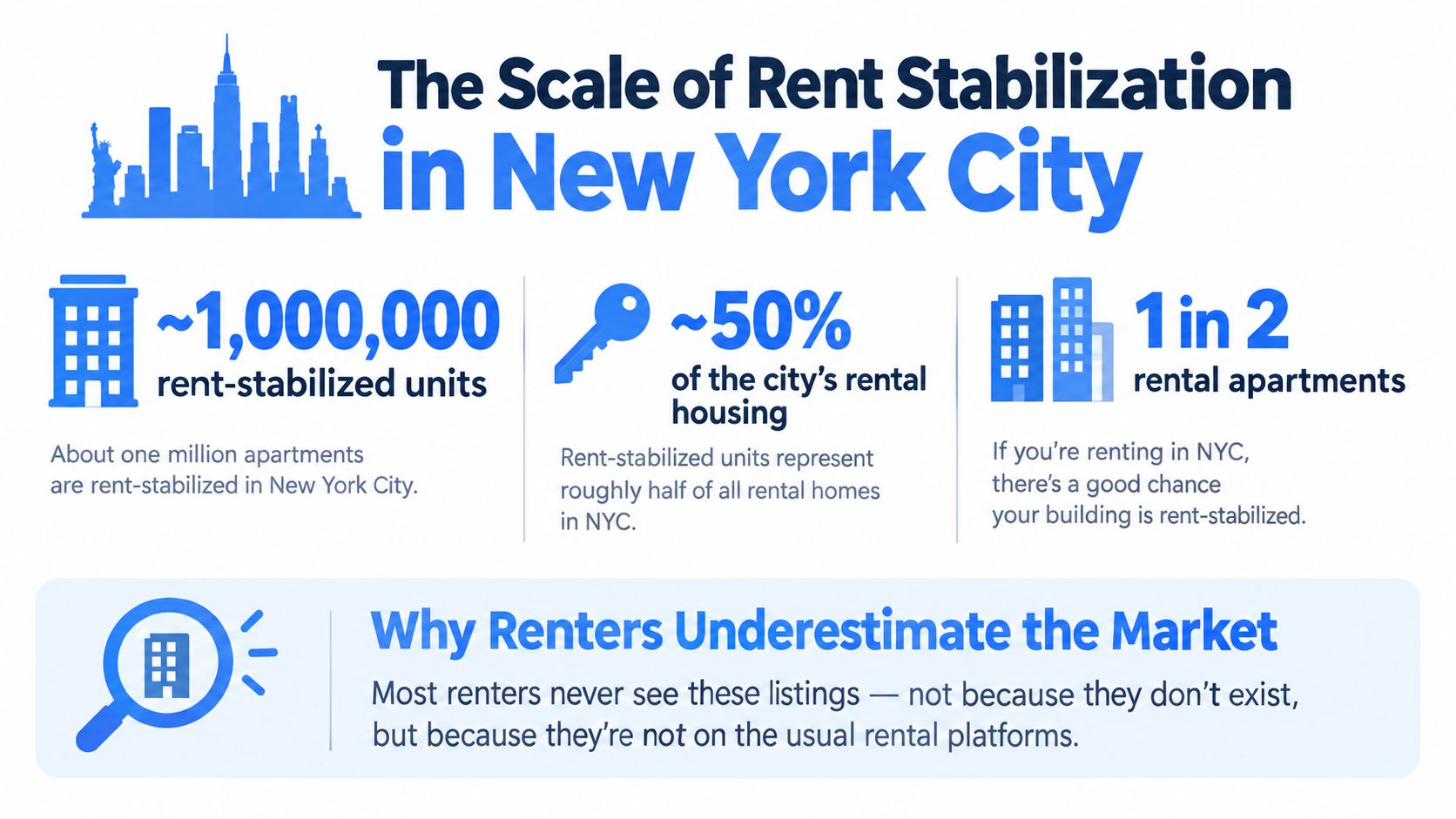
The difficulty is that a large existing housing stock doesn't mean a large public inventory of vacancies. Tenants tend to hold onto apartments that offer renewal protections and regulated increases. Owners and brokers also don't always advertise stabilization prominently, and some listings use vague language such as “regulated,” “affordable,” or “preferential rent” without explaining the unit's legal history.
The 2019 turning point
The Housing Stability and Tenant Protection Act, or HSTPA, took effect on June 14, 2019. That date matters because it sharply changed the rules governing deregulation. Before the law, many apartments could leave stabilization through vacancy-related or high-rent deregulation pathways. The post-2019 framework generally keeps apartments stabilized even when the rent rises, subject to narrow exceptions, including certain 421-a buildings, as described in the IBO's post-HSTPA analysis.
The historical loss was substantial. Between 1994 and 2019, 170,386 rent-stabilized apartments were permanently deregulated, mostly through vacancy decontrol, according to that same analysis. In 2019 alone, 11,263 apartments were deregulated, including 7,878 units lost through high-rent vacancy deregulation. Those figures explain why older listings and historical records can be confusing, and why a building's reputation isn't enough.
Practical rule: Treat stabilization as a unit-specific legal status. Building age helps you find leads, but the rent history decides whether a lead deserves your application.
For a renter searching today, the takeaway is straightforward. Don't limit your search to listings that boldly say “rent stabilized.” Search the broader market, identify likely candidates, and then verify the apartment before committing money or signing paperwork.
Where to Find Rent-Stabilized Listings
There's no central place that lists available rent-stabilized apartments. The Rent Guidelines Board says renters typically find them through word-of-mouth, brokers, and online listings, while NYS Homes and Community Renewal handles official rent-history verification. That fragmented setup is the main discovery challenge, so relying on one website is a bad strategy.
Start with a wide search across StreetEasy, Zillow, Craigslist, RentHop, OpenIgloo, brokerage sites, landlord portals, and neighborhood networks. Search terms such as “rent stabilized,” “regulated,” “preferential rent,” and “RS unit” can surface leads, but keyword searches miss apartments whose listing copy says nothing about regulation.

Build a search that keeps running
Set your filters once, then let multiple channels bring opportunities to you. Use your budget, neighborhood boundaries, bedroom requirement, move-in window, and any acceptable tradeoffs. Keep a second, broader search active for buildings that might qualify even when the listing doesn't mention stabilization.
Your workflow should include:
- Multiple listing sources: Check both large marketplaces and smaller broker or landlord channels. Official guidance confirms that stabilized vacancies aren't centralized, so no single feed is complete.
- Saved searches: Create separate searches for strict matches and plausible candidates. A strict search protects your time, while a broader search catches poorly labeled listings.
- Fast notifications: Use email or SMS alerts where available. A listing that looks promising at noon may have an entirely different application queue later that day.
- A tracking sheet: Record the address, apartment number, asking rent, broker, listing language, building age, and verification status. This prevents you from confusing similar units in the same building.
- A prepared contact message: Ask immediately whether the apartment is offered with a rent-stabilized lease and whether the owner will provide the rent history before signing.
If a broker asks about your qualifications, prepare for that conversation. Renters who need a refresher on approval standards can review this practical guide to what credit score do landlords want before contacting agents. Credit is only one part of an application, but knowing your file helps you respond without wasting a viewing.
For a focused explanation of the fragmented discovery process, use this guide to where to find rent-stabilized apartments in NYC. The aim isn't to browse endlessly. It's to create enough coverage that you hear about viable apartments from several directions while preserving time for verification.
How to Verify Rent Stabilization Status
A listing is a lead, not proof. The most common renter mistake is assuming that a qualifying building automatically makes every apartment inside it rent stabilized. Official guidance warns that individual apartments can have different histories, exceptions can apply, and historical deregulation rules affected some units whose legal regulated rent crossed thresholds that varied by move-in period.
Use documents, not assurances
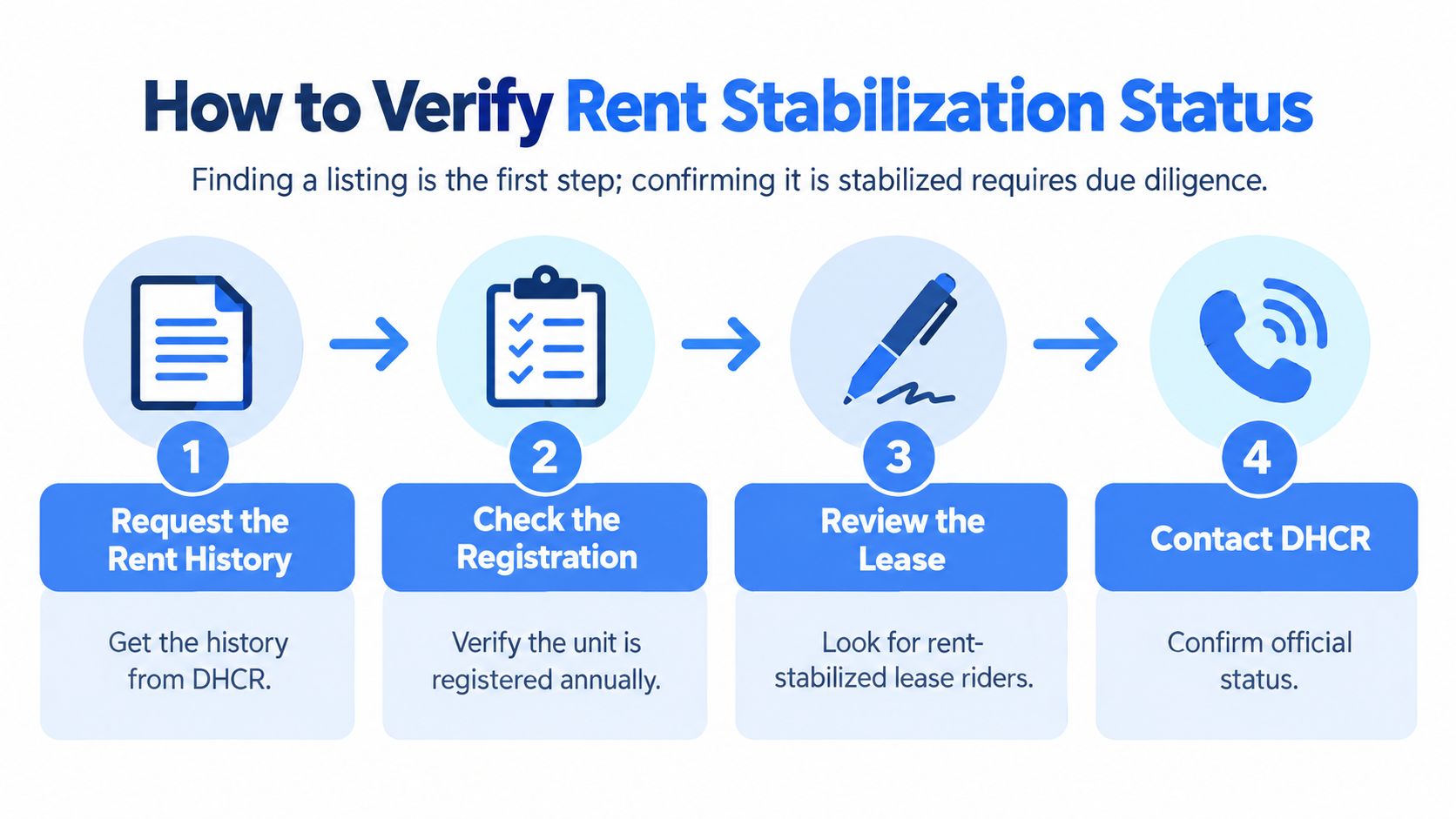
Ask for the proposed lease and any rent-stabilized lease rider before you commit. Read the apartment number, legal regulated rent, preferential rent language, renewal terms, owner information, and rider disclosures. If the broker says the apartment is stabilized but refuses to discuss the lease or rent history, treat that refusal as a serious warning.
Then request the apartment's official rent history from NYS Homes and Community Renewal. Include the full building address and apartment number. HCR's record can show whether the apartment was registered as stabilized and how its rent history developed. The Rent Guidelines Board identifies HCR as the definitive source for confirming stabilized status in its rent-stabilization frequently asked questions.
Use this sequence:
- Request the rent history. Submit the complete address and unit information through the available HCR channels.
- Compare the record with the lease. Look for unexplained differences in apartment number, rent figures, registration status, or tenancy dates.
- Ask written questions. Get the broker or owner to explain any gap instead of accepting a verbal promise.
- Pause before signing. If the history is unclear, have a tenant attorney or qualified housing professional review the documents.
Don't sign first and investigate later. Your leverage is strongest while the owner still wants your application.
The 2019 law strengthened protections for tenants paying a preferential rent on or after June 14, 2019. That rent generally remains in place for the life of the tenancy, with future increases governed by the Rent Guidelines Board's annual percentages rather than an automatic jump to the full legal rent. Confirm that the lease reflects the arrangement you were offered.
For a practical document-by-document walkthrough, see how to check if an apartment is rent stabilized. Broader housing and land-market context can also be useful when you're evaluating why a building is being marketed a certain way, and Unitism®’s book on land value offers that wider perspective. It doesn't replace HCR verification, which remains the relevant authority for this decision.
Understanding Building Eligibility and Exceptions
Building characteristics are useful for finding prospects, but they're not a legal conclusion. NYC guidance says rent-stabilized apartments are most often found in buildings with six or more units constructed before 1974, while New York State's tenant guide gives the more specific general window of February 1, 1947 through December 31, 1973 for many covered buildings.
That creates two search paths. The first is the traditional older-building screen. The second includes buildings that became subject to stabilization through tax benefits or other regulatory programs.
Compare the two eligibility paths
| Building profile | What it tells you | What you still need |
|---|---|---|
| Six or more units, built from February 1, 1947 through December 31, 1973 | A strong first-pass signal | The unit's lease and HCR rent history |
| Some pre-1947 buildings | Possible coverage under specific rules | Confirmation of the apartment's regulatory category |
| Some post-1974 buildings with benefits such as 421-a or J-51 | A frequently missed source of leads | The applicable benefit period and unit records |
| A building that appears on a list | Useful evidence for prospecting | Proof that the particular apartment is registered or protected |
The New York Attorney General's residential tenants' rights guide supports this building-based screen while making the important point that eligibility isn't automatic. A building can look perfect on paper while a specific apartment has a different history.
Ask better questions
Don't ask only, “Is this building rent stabilized?” Ask, “Will my lease for apartment 4B be rent stabilized, and can I review the official rent history before signing?” Then ask whether the building received 421-a or J-51 benefits, whether the apartment has a stabilized lease rider, and whether the advertised rent is a preferential rent.
Tax-benefit buildings deserve special attention because they broaden the search beyond the familiar pre-1974 profile. At the same time, tax-benefit status can involve dates, conditions, and exceptions that a listing agent may not explain accurately. Use the building profile to decide where to look, not to decide what to sign.
Renters tracking regulatory changes can also consult this guide to the 2026 rent-stabilized building declaration law, then verify the current status of the specific unit through official records.
Timing Your Application and Deal Strategy
The strongest application is prepared before the right listing appears. Gather identification, income documentation, employment details, landlord references, bank or asset records where relevant, and credit information in a folder you can send quickly. Ask your references in advance whether they'll respond promptly.
Don't confuse speed with care. Contact the listing quickly, schedule the viewing, and request the lease and rent-history information early. But don't transfer money or sign just because a broker says another applicant is waiting. A fast application without verification is how renters pay for an apartment they misunderstood.

Make your decision in the right order
Use this order when a promising apartment surfaces:
- Respond immediately. Send a concise message stating your move-in timing, household details, and readiness to provide documents.
- Inspect the apartment and building. Confirm the unit number, services, condition, and the person authorized to offer the lease.
- Request the paperwork. Ask for the proposed lease, rider, and official rent history.
- Resolve discrepancies. Put questions in writing and save the answers.
- Submit a complete package. Once the status and terms make sense, apply without avoidable delays.
Preferential rent changes the negotiation conversation. For tenants paying a preferential rent on or after June 14, 2019, the preferential amount generally remains the base rent for the tenancy, and future increases follow Rent Guidelines Board percentages. Ask the owner to state the preferential rent clearly in the lease rather than relying on a listing's advertised figure.
Your goal isn't merely to be first. It's to be first with a complete file and enough information to make a safe decision.
If the owner or broker insists that official records can be checked only after signing, slow down. The city's current guidance emphasizes requesting the rent history and reviewing the lease before committing. A landlord who expects a serious applicant should understand why you're checking the legal status of the apartment you're about to rent.
Putting It All Together - Your Search Action Plan
Treat the process like a funnel. Start broad across listing platforms, brokers, referrals, and building contacts. Save searches, respond to plausible matches, and keep a record of every address that survives the first screen.
Then narrow aggressively. Confirm the exact apartment number, inspect the lease and rider, request the HCR rent history, and compare the documents before signing. Building age, tax-benefit status, and listing language can help you prioritize, but none replaces unit-level verification.
Your working checklist is simple:
- Search broadly: Don't depend on one website.
- Alert continuously: Let new listings reach you.
- Prepare documents: Keep your application package ready.
- Verify early: Request the official rent history before committing.
- Question inconsistencies: Require written answers.
- Sign only after review: The lease must match the status you were promised.
Rent stabilization is widespread, but access remains fragmented. A systematic search gives you more chances to find a lead, while careful verification keeps a promising lead from becoming an expensive mistake.
RentReboot monitors rental platforms and sends matching NYC apartment alerts by email or SMS, including potential rent-stabilized listings identified against city data. Set up your saved search through RentReboot, then use the alerts to find opportunities while you complete the lease and rent-history checks yourself.