
You're standing in a Manhattan apartment with the keys in your hand, a moving van waiting outside, and a lease sitting in your inbox. The broker has already explained the rent, the landlord wants a signature, and everyone is acting as if the document is routine. It isn't. That lease will shape your monthly costs, possession of the apartment, repair responsibilities, renewal position, and ability to leave.
The practical answer to what is a lease agreement is more useful than a dictionary definition. It's the document that allocates risk between you and the owner after you move in. A careful review can expose an expensive utility obligation or an impossible subletting clause before you sign. A rushed signature can turn a manageable disagreement into a formal default dispute.
Table of Contents
- Why the Lease Is Your First Shield as a New Renter
- What a Lease Agreement Actually Defines
- Fixed-Term Leases vs Month-to-Month Agreements in Today's Market
- Landlord and Tenant Obligations That Drive Real Costs
- Red Flags and Negotiable Clauses Renters Should Check Before Signing
- Next Steps for Renters in NYC and Other Major Markets
Why the Lease Is Your First Shield as a New Renter
A new renter often treats the lease as the final administrative step after choosing an apartment. In New York City, that order is backwards. The apartment may look perfect during a ten-minute viewing, but the lease determines what happens when the heat fails, a roommate moves out, the landlord needs access, or you need to end the tenancy earlier than expected.
Consider two tenants renting similar apartments in the same building. One reads the riders, confirms which utilities are included, and gets every promised repair written into the agreement. The other relies on a broker's verbal assurance that the owner will “take care of it.” After move-in, the first tenant has a paper trail. The second has a memory of a conversation, which is a much weaker foundation for resolving a dispute.

The document that governs life after the keys
A lease does more than record the rent. It sets the term of possession, identifies the premises, assigns responsibilities, and establishes what counts as a violation. It also provides the reference point for renewal discussions, notices, access requests, repair complaints, and move-out charges.
That matters because many renters focus on the first payment and ignore the last one. A clause about early termination, automatic renewal, notice, or attorney's fees may affect your exit options long after the excitement of moving in has faded. The NYC lease signing guide with a 24-hour review timeline is useful for organizing that review before a deadline creates unnecessary pressure.
Practical rule: If a promise affects your money, occupancy, repairs, or ability to leave, put it in the lease or a signed rider.
Roommates create another layer of exposure. Decide in advance how you'll divide rent, utilities, deposits, shared furnishings, and replacement costs. A practical resource on roommate bill-splitting basics can help with the household budget, but it doesn't replace checking whether every roommate is named or authorized under the lease.
A lease also changes your mindset. You're not merely asking for permission to stay in someone else's property. You're accepting a defined set of obligations in exchange for legally recognized possession. Read it as the operating manual for the tenancy, not as paperwork that can be skimmed once the application is approved.
What a Lease Agreement Actually Defines
A lease agreement is a legally binding contract that gives a tenant exclusive possession of a property for a defined term while the landlord retains ownership. It generally creates privity of contract, which allows courts to enforce payment, maintenance, and termination provisions against the parties, as described in the California Department of Real Estate reference on lease agreements.
That sounds technical, but the practical meaning is straightforward. The owner can't treat your possession as informal, and you can't treat the rent or care obligations as optional. The written terms and applicable landlord-tenant law work together to determine what happens when one side fails to perform.
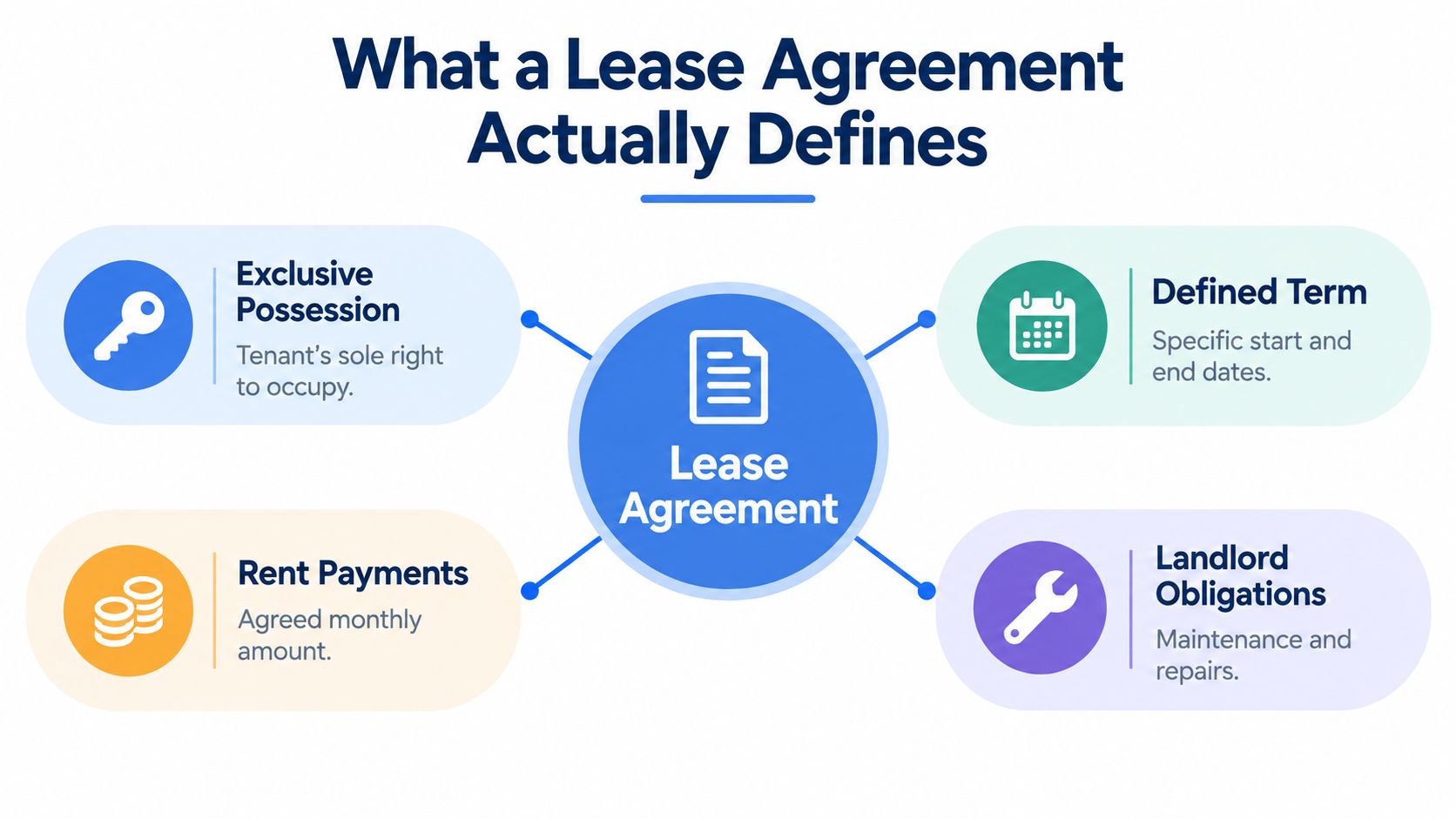
Four variables determine your exposure
Duration comes first. The start date, end date, renewal language, and notice requirements tell you how long the owner must provide possession and how long you must pay under the agreed arrangement. A vague date or conflicting rider can create trouble at both move-in and move-out.
Consideration, usually rent, is the financial exchange for possession. The lease should identify the periodic amount, due date, accepted payment method, deposit terms, concessions, late-payment provisions, and any recurring charges. Don't assume an advertised rent captures every mandatory cost. Read the financial terms in the lease and its riders together.
Maintenance and repair duties divide operational responsibility. A tenant may be responsible for ordinary care and prompt notice of problems, while the landlord remains responsible for habitability and basic systems under applicable law. If the document assigns cleaning, appliance, pest, or fixture duties unusually broadly, ask what the clause means before accepting it.
Breach and early termination provisions describe the consequences of nonperformance. Look for default notices, cure opportunities, re-letting language, assignment or subletting rules, and charges connected with leaving early. These clauses are where a seemingly affordable apartment can become financially difficult to exit.
A lease therefore functions as a risk-allocation document. It answers who pays, who repairs, who may occupy the unit, how long the arrangement lasts, and what happens when someone breaks the deal. That's why it carries more weight than an informal promise, even when the apartment search began with a listing and a conversation.
For practical administration, some renters also need a signed lease to document their address. Guidance on how to check lease rules with Cloud Residents can help identify which parts of the document may be relevant for proof-of-address requests.
Fixed-Term Leases vs Month-to-Month Agreements in Today's Market
The choice between a fixed-term lease and a month-to-month agreement is a choice between predictability and flexibility. A fixed-term lease normally holds the agreed terms for a specified period. A month-to-month arrangement renews automatically until proper notice is given, so it can be easier to leave but may expose the renter to more uncertainty around continuation.
The Bureau of Labor Statistics reported that, from January 2022 through June 2022, 59.6% of U.S. leases lasted 12 months, 31.8% were month-to-month, and 8.6% had other lengths (BLS housing lease data). The same data showed regional variation, including 62.7% month-to-month leases in California and 58.4% in Washington, D.C. Those figures don't dictate the right choice for a New York renter, but they show that lease structure varies substantially by market.
A fixed term usually works better when your priority is stability. You know the contractual period, can plan your budget around it, and generally have stronger protection against unilateral mid-term changes that aren't authorized by the agreement or law. The trade-off is commitment. If your job, relationship, school plans, or roommate arrangement changes, leaving early may require negotiation or trigger obligations under the lease.
Month-to-month works better when circumstances are unsettled. It can suit someone testing a neighborhood, waiting for a job transfer, or unable to commit to a longer stay. The cost of that flexibility is renewal risk. The agreement may continue automatically, but that doesn't mean the renter has the same long-term certainty as someone with a fixed end date and renewal framework.
Lease term types at a glance
| Feature | Fixed-Term Lease | Month-to-Month Agreement |
|---|---|---|
| Length | Runs for the stated period, subject to the lease and applicable law | Continues in recurring periods until proper notice is given |
| Budget planning | Usually offers clearer rent and possession planning during the term | Offers flexibility, but future continuation may be less certain |
| Mid-term changes | Terms are generally locked for the agreed period unless the lease or law permits a change | The arrangement can change at renewal, subject to notice and local requirements |
| Leaving early | May require consent, assignment, subletting, or compliance with an early-termination clause | Often easier to end with proper notice, but notice rules still matter |
| Best fit | Renters prioritizing stability and predictable occupancy | Renters prioritizing mobility and a shorter commitment |
Market timing can affect the decision. A 2026 rental-market report cited in renter guidance put average residential leasing time at 32.76 days in the second quarter of 2026 (the current lease-term and market-timing guidance). A faster leasing environment can pressure renters to sign quickly, but speed shouldn't decide whether flexibility or stability is more valuable to you.
For an NYC renter, ask a blunt question before choosing: Which risk can you absorb more easily, being committed longer than planned or needing to find another apartment sooner than expected? The answer should guide the term, not the broker's preference.
Landlord and Tenant Obligations That Drive Real Costs
Rent is only the most visible obligation in a lease. The financial exposure often sits in the less glamorous clauses, including utilities, deposits, occupancy limits, pets, access, repairs, subletting, and move-out conditions. A lease is well formed when it makes those responsibilities specific instead of leaving both sides to fill in the blanks later.
The Colorado landlord and tenant rights reference describes the central risk allocation clearly. A lease should specify duration, rent and deposits, maintenance responsibilities, and breach or termination conditions, with timely payment and habitability among the core enforceable obligations.
Where ordinary disputes become expensive
A tenant who doesn't confirm utility responsibility may budget for rent alone and discover that heating, electricity, or another service is handled separately. A tenant who overlooks occupancy language may create a lease violation by adding a partner or roommate. A tenant who fails to understand access provisions may be surprised by entry requests, while an owner who ignores repair duties may create habitability problems.
The important question isn't merely whether a clause exists. Ask how it operates in real life:
- Money: What must be paid at signing, during the term, and at move-out?
- Condition: What condition must the apartment be in when you receive it and return it?
- Permission: Can you add an occupant, keep a pet, or sublet, and what approval process applies?
- Enforcement: What notice, cure period, fee, or remedy follows a violation?
- Evidence: Which promises appear in the lease, riders, inspection record, or receipts?
Written terms are generally preferable because they reduce disputes about what the parties agreed to, although neutral legal guidance notes that oral arrangements may remain enforceable for certain periods. That doesn't make a verbal agreement a sensible substitute for a complete written lease. If the arrangement matters, document it.
Landlords should also document the unit's condition and responsibilities before turnover. A practical landlord turnover checklist can help organize inspection and handoff tasks, while tenants should keep their own dated photos, repair requests, payment records, and move-out communications.
In NYC, don't wait until a deposit dispute to learn how the deposit rules work. Review the NYC security deposit and tenant rights guide before signing, then compare the lease language with current local requirements. A clause that sounds standard can still create confusion if it contradicts governing law or fails to explain the parties' actual obligations.
Red Flags and Negotiable Clauses Renters Should Check Before Signing
Most renters don't need to rewrite an entire lease. They need to identify the clauses that can change the cost or control of the tenancy. Neutral legal aid guidance lists common subjects such as term length, rent, deposits, occupancy, utilities, pets, subletting, landlord access, and attorney's fees (lease and rental agreement guidance).
Start with the financial page, then read every rider. Compare the advertised rent with the amount the lease requires, identify deposits and recurring charges, and ask for unclear fees in writing. Don't sign a blank space, an incomplete addendum, or a document that refers to rules you haven't received.
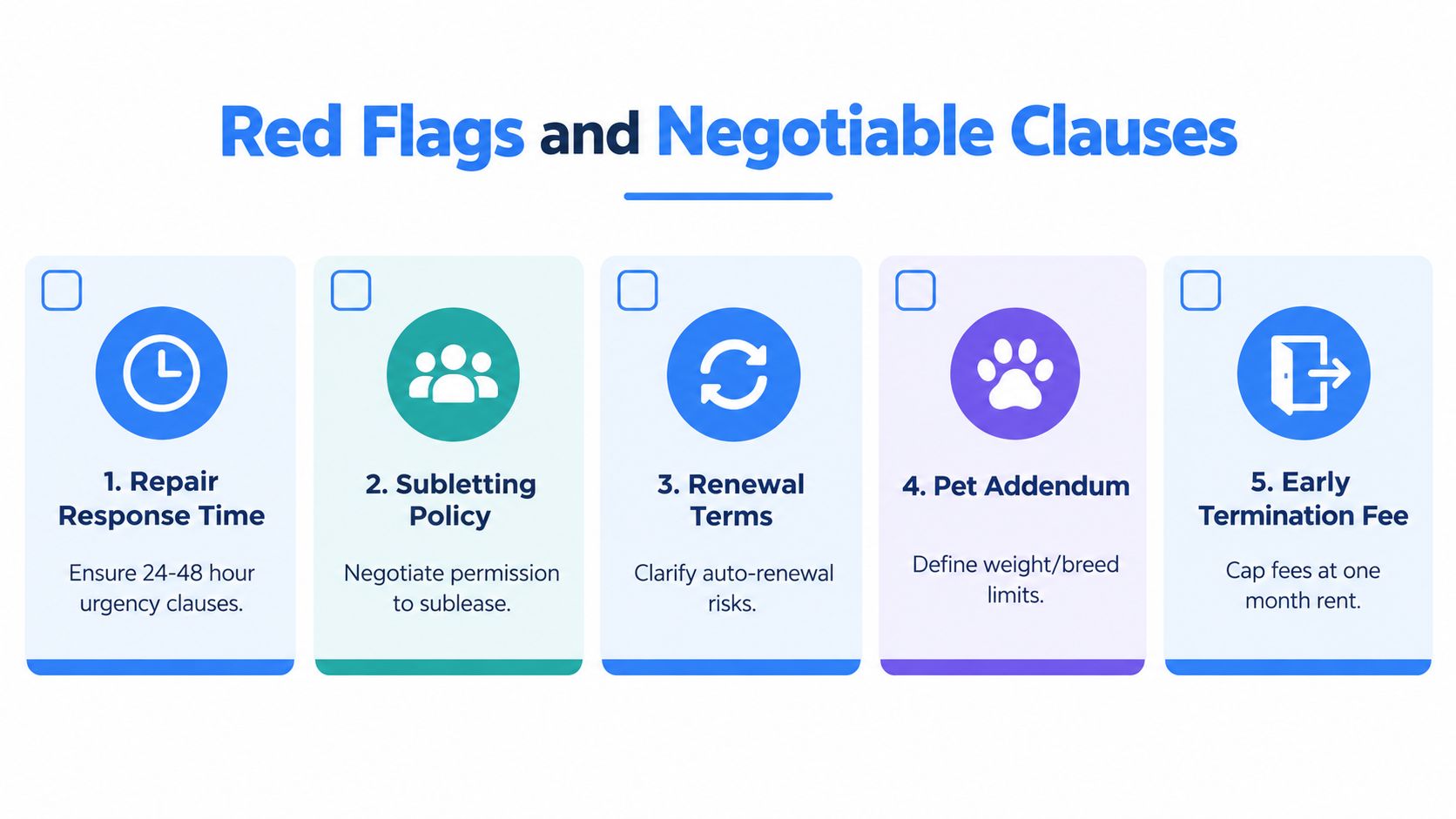
Five checks that deserve a direct conversation
Repair response language: The lease may not promise a particular response time for every problem, but you can ask how urgent repairs are reported and who receives the request. Get the contact method and escalation route in writing.
Subletting and assignment: If your job or housing plans could change, check whether the lease permits subletting or assignment and what consent procedure applies. “Subject to approval” is not a complete answer. Ask what documents, timing, and standards the owner will use.
Renewal and notice: Find the exact renewal mechanism, notice deadline, and rent language. An automatic renewal clause deserves special attention because missing a notice date can affect your exit options.
Pet and occupancy riders: Confirm permitted animals, occupants, guests, and building rules. A verbal statement that a pet is acceptable won't protect you if the signed rider says otherwise.
Early termination: Look for buyout language, re-letting duties, replacement-tenant rules, and any stated charge. You can ask for a clearer and more workable exit process before signing. Don't assume a proposed cap or concession applies unless it appears in the final document.
Some terms are negotiable, but local law can override lease language. That is especially important when assessing whether an NYC apartment may have rent-stabilization protections or other tenant safeguards. A landlord or broker's label is not enough. Ask for the relevant documents, verify the apartment's status through appropriate city or state resources, and get advice when the consequences are significant.
Use the NYC lease negotiation guide for riders and a diplomatic clause to prepare a focused request rather than sending the owner a vague demand to “make the lease fair.” Specific questions are easier to answer and more likely to produce a signed written amendment.
A final warning: pressure is not proof. If the person presenting the lease won't explain a fee, refuses to provide referenced riders, or insists you sign before you can review the complete document, treat that behavior as information about the transaction.
Next Steps for Renters in NYC and Other Major Markets
A strong lease review starts before you apply. Save the listing, record the advertised rent and included services, ask whether the unit may qualify for rent stabilization, and request the complete lease package rather than only the signature pages. Compare the promises in the listing with the final lease and riders.
Then verify the parts that affect long-term risk. Check local housing-agency guidance for notice, deposits, repairs, access, and rent regulation. If the apartment is presented as rent stabilized, ask for the supporting records and compare the claim with official New York City or state resources. A lease can contain important protections, but it shouldn't be the only source you use to assess regulatory status.
Build a search process that leaves room to review
Time pressure is a recurring problem in major rental markets. Set your budget, neighborhoods, bedroom requirements, and acceptable lease term before listings arrive. Use alerts across multiple listing sources or search manually on a schedule, so you aren't forced to accept the first plausible apartment just because you began looking late.
When a listing matches, request the lease promptly, but preserve a real review window. Check dates, parties, rent, deposits, utilities, occupancy, pets, subletting, access, repairs, renewal, default, and termination. Keep the countersigned copy and receipts in one place after everyone signs.
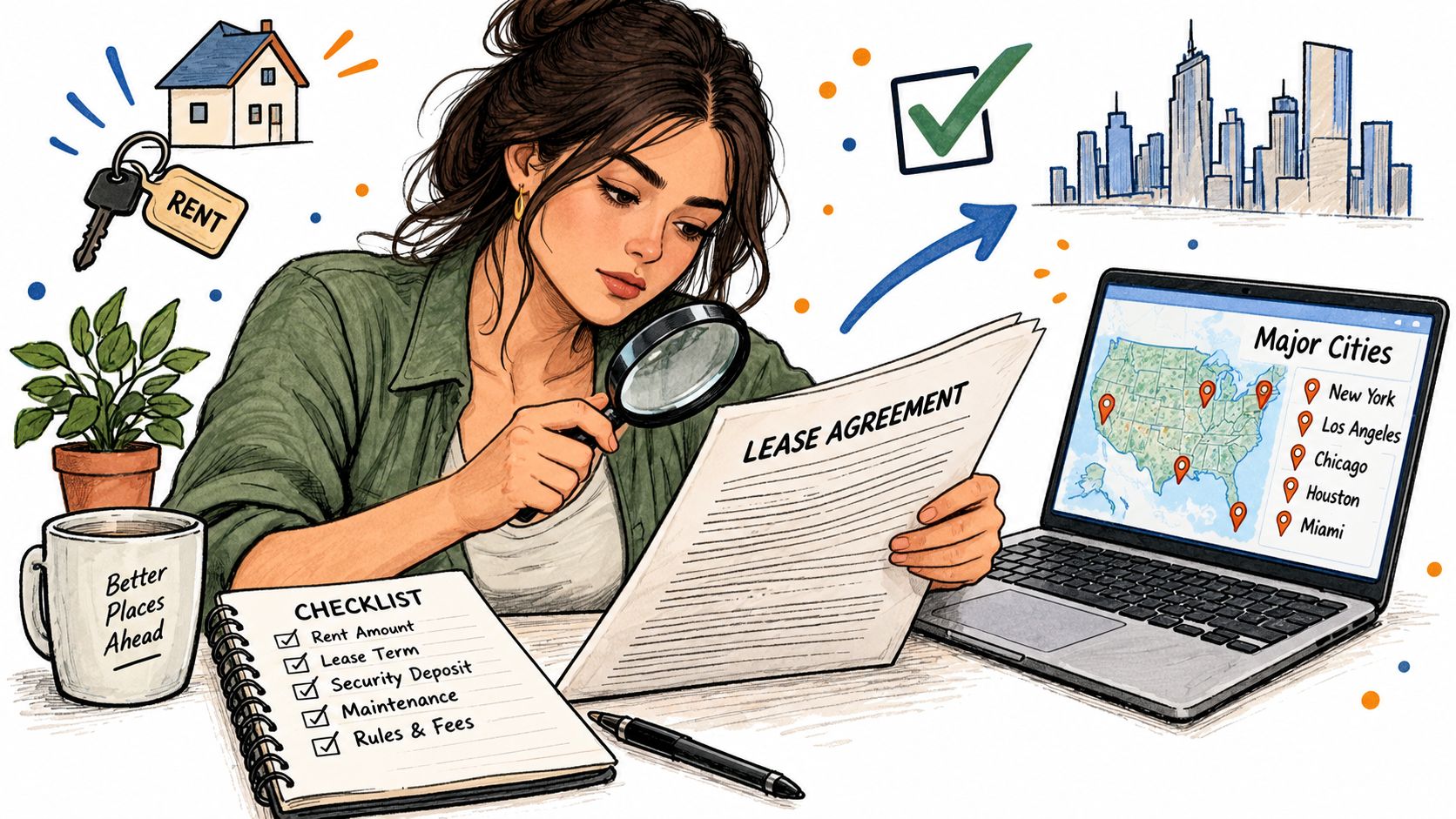
The definition of a lease agreement becomes useful only when it changes your behavior. You should know what possession you're receiving, what money you owe, which repairs belong to the owner, what happens if plans change, and whether local protections affect the written terms. That knowledge improves both apartment selection and negotiation.
RentReboot monitors rental listings across multiple platforms, sends email or SMS alerts for saved search criteria, and provides neighborhood rent data and resources for renters evaluating NYC apartments. Visit RentReboot to set up a search that gives you more time to find the right apartment and review its lease before signing.